The glenohumeral joint remains one of the most mobile yet unstable articulations in the human body. Its function relies heavily on the synchronous firing of the rotator cuff muscles, specifically the supraspinatus, infraspinatus, teres minor, and subscapularis, to keep the humeral head centered within the glenoid fossa. When this muscular balance fails, impingement, tendonitis, or dislocation often follows. Rehabilitation protocols and preventative strength programs focus on restoring this balance through targeted movement.
Pendulum Swing
Early-stage rehabilitation frequently utilizes gravity to distract the humerus from the glenoid, providing gentle traction. Momentum generates small circles rather than active muscular effort. Orthopedic surgeons often prescribe this immediately following rotator cuff repair to prevent adhesive capsulitis, or frozen shoulder, without compromising surgical sutures. The movement encourages synovial fluid circulation.
Doorway Pectoral Stretch
Tightness in the pectoralis major and minor muscles pulls the scapula forward, leading to a protracted posture that decreases the subacromial space.Standing in an open doorway with elbows bent at ninety degrees allows the individual to lean forward gently. Stretching these anterior structures permits the scapula to sit flush against the thoracic cage.
Posterior Capsule Sleeper Stretch
Internal rotation deficits often stem from a tight posterior capsule, which is common in overhead athletes like pitchers or tennis players. The individual lies on their side with the affected arm on the ground and the elbow bent to ninety degrees. Using the opposite hand, gentle pressure pushes the forearm down toward the floor. Restricting internal rotation alters joint kinematics, forcing the scapula to compensate and potentially leading to dyskinesis.
Scapular Retraction Isometrics
Postural dysfunction often involves lengthened and weak rhomboids. This exercise involves standing or sitting with a neutral spine and squeezing the shoulder blades together without shrugging. The focus remains on the medial border of the scapula. Frequent execution of this movement throughout the workday combats the "upper crossed syndrome" pattern seen in office workers.
Isometric External Rotation
Strengthening the rotator cuff without joint movement helps manage acute tendonitis. Standing sideways to a wall, the individual presses the back of the wrist into the surface while keeping the elbow tucked firmly against the side. Physical therapists utilize this technique when active movement causes pain. It allows for muscle recruitment while minimizing shear forces on inflamed tendons.
Isometric Internal Rotation
Similar to the external variation, this movement targets the subscapularis. The individual stands facing a door frame or corner, pressing the palm inward against the immovable object. The elbow must remain close to the torso to prevent pectoral dominance.
Serratus Anterior Wall Slides
Scapular winging indicates weakness in the serratus anterior muscle. Forearms are placed against a wall, with the individual sliding the arms upward in a 'V' shape. As the arms ascend, the shoulder blades should wrap around the rib cage. Proper recruitment of the serratus anterior ensures the scapula rotates upward during arm elevation.
Banded External Rotation
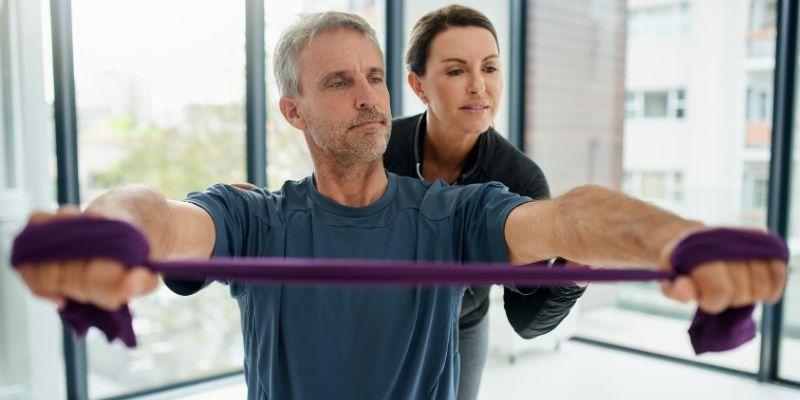
Resistance bands provide variable tension that matches the muscle's length-tension relationship. With the elbow fixed at the side, often using a rolled towel between the arm and ribs to ensure form, the forearm rotates outward. This isolation of the posterior cuff serves as a staple in prevention programs for swimmers and construction workers who perform repetitive overhead tasks.
Banded Internal Rotation
The subscapularis functions as a primary internal rotator. Using a resistance band anchored to the side, the individual pulls the hand across the stomach. Control during the eccentric, or return, phase is vital. Rapid release of tension can strain the tendon.
Prone T Raise
Targeting the middle trapezius requires fighting gravity. Lying face down, the arms extend out to the sides. The individual lifts the arms toward the ceiling, squeezing the shoulder blades together. This exercise builds the structural integrity of the upper back.
Prone Y Raise
Lower trapezius weakness contributes significantly to poor overhead mechanics. In the prone position, arms are raised at a forty-five-degree angle, forming a 'Y'. Lifting the thumbs toward the ceiling activates the lower trapezius, which depresses the scapula. This depression counters the upward pull of the upper trapezius.
Standing Resistance Band Rows
Rows integrate scapular retraction with glenohumeral extension. Holding a band anchored at chest height, the elbows are pulled back. The movement must originate from the scapula retracting rather than the biceps pulling. Rehabilitation specialists emphasize this pattern to correct dominance of the upper trapezius. The goal is to restore a balanced force couple between the front and back of the upper body.
Face Pulls
This compound movement addresses both the rear deltoids and external rotators. Using a cable machine or band set at head height, the individual pulls the resistance toward the face, separating the hands at the end of the movement. This action forces the humerus into external rotation while retracting the scapula. It acts as a direct counter-movement to pressing exercises like push-ups or bench presses.
Scaption (Empty Can/Full Can)
Raising the arm thirty degrees forward creates the scapular plane. This specific angle allows the supraspinatus to contract without grinding against bone. Therapists prioritize the "full can" or thumbs-up technique because the thumbs-down "empty can" rotation often compresses the tendon under the acromion. Heavy resistance is unnecessary here.
Front Deltoid Raises
Lifting a weight anteriorly creates a long lever arm that challenges the front deltoid. The movement requires a strict vertical path to shoulder height. Compensatory leaning transfers the load to the lumbar spine, rendering the lift useless for the shoulder. Everyday lifting rarely occurs at full extension. This exercise specifically targets the joint's capacity to manage load away from the body's center of gravity.
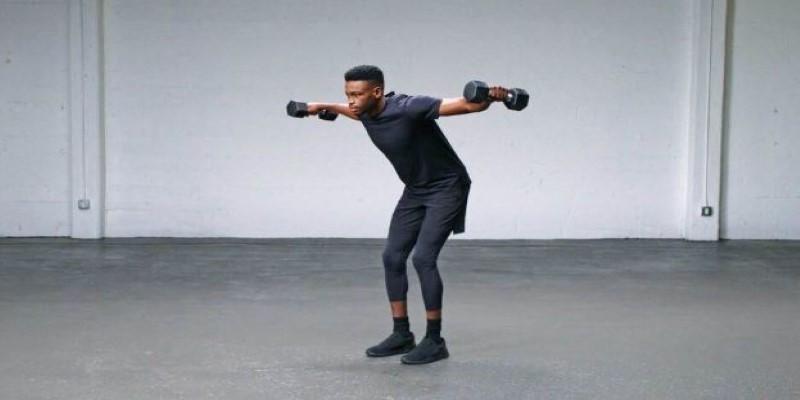
Reverse Flies
Weak rear delts stay invisible until the shoulder hurts. The body hinges forward, flat back, while arms lift sideways. Gravity forces the posterior chain to work alone. This retraction anchors the arm bone back in the socket. It fights the forward drag that tight chest muscles constantly apply.
High Plank with Shoulder Taps
Pressing into the floor wakes up joint sensors faster than waving dumbbells. From a push-up hold, lifting one hand to tap the opposite shoulder removes a base of support. The grounded arm fights to stop the torso from twisting. Reflexive firing prevents collapse. This mimics the chaos of catching a heavy fall.
Long-Term Maintenance and Progression
Fixing the pain is just step one. Injury returns the moment rehab stops. Resilience comes from making these moves a habit, not a cure. The shoulder trades safety for reach. Without muscle tension holding the joint together, the bones drift apart again.